
Quick Answer
Choose a vibrating screen by defining the separation task, material characteristics and required product quality before comparing machine sizes. A screen that handles free-flowing granules may not suit cohesive powder, slurry or coarse abrasive feed. The machine, screening surface and feed arrangement need to work together.
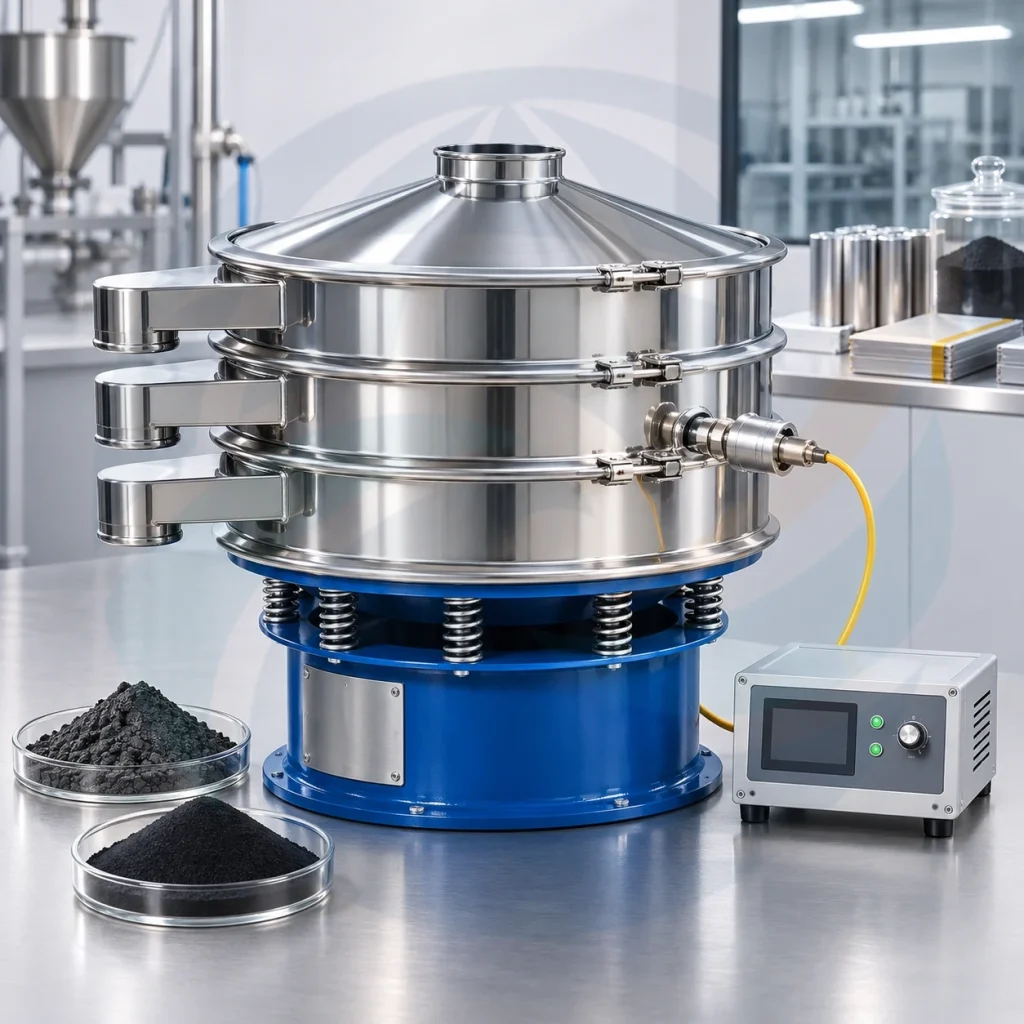
Website image of a multi-deck vibro sifter configuration.
Screen Selection Criteria: What to Check
Start with representative particle-size data, moisture, bulk density and the expected feed range. Decide whether the process removes occasional contamination, produces several saleable fractions or separates solids from liquid. These tasks create different selection priorities. Request a material trial when suitability cannot be established from relevant operating evidence.
Material-to-Screen Matching: Making the Decision
Compare candidates against the same written duty. Include installation space, cleaning, access and downstream handling, not just quoted throughput. Keep unresolved requirements visible until the supplier can demonstrate a suitable configuration.
Review Checklist
- Separation objective.
- Representative material data.
- Complete installation requirements.
For supporting technical background, consult Metso: screening media handbook. This is technical background from another manufacturer, not evidence for a HaoYuan model.
Apply the Requirements to Your Project
Review HaoYuan’s screening equipment range as a starting point for the relevant equipment discussion. Confirm the actual model, material and scope against the requirements above; an illustration or product category does not establish performance for an untested duty.
Work Through the Detailed Decisions
Linear Screen Comparison
Linear and circular describe motion patterns, but the labels alone do not define the complete machine. In particular, a heavy-duty circular-motion aggregate screen should not be confused with every round powder sifter. Ask what motion, construction and screening duty the supplier means. The detailed linear vs circular vibrating screens guide covers the checks and decision boundaries.
Rotary Sifter Comparison
Compare a rotary vibrating sieve and a tumbler screener by the actual motion, material response and required separation. Neither machine name guarantees better accuracy or gentler handling. The relevant question is how each candidate handles your powder or granules at the required quality. The detailed rotary sieve vs tumbler screener guide covers the checks and decision boundaries.
Ultrasonic Sieve Suitability
Consider an ultrasonic vibrating sieve when fine-powder screening is limited by mesh blinding and the proposed system is compatible with the material. Ultrasonic assistance is not a universal substitute for correct feeding, aperture selection or a suitable base screening machine. The detailed ultrasonic vibrating sieve selection guide covers the checks and decision boundaries.
Trommel Screen Comparison
A vibrating screen and a trommel use different screening arrangements, so compare them around the separation duty rather than a general preference. Feed characteristics, available footprint and the required fractions matter alongside the way material moves through the equipment. The detailed vibrating screen vs trommel guide covers the checks and decision boundaries.
Scalping Duty Definition
Scalping removes unwanted coarse material, grading produces defined size fractions, and safety screening checks for unwanted oversize before a later process. These goals can overlap, but they should not be treated as identical acceptance requirements. The detailed scalping grading safety screening guide covers the checks and decision boundaries.
Dry Screening Process
Choose dry or wet screening by considering the material, separation target and the consequences of adding process liquid. Water may change particle dispersion and handling, but it also creates liquid-management and downstream requirements. The detailed dry vs wet screening guide covers the checks and decision boundaries.
Batch Sifting Workflow
Batch screening is organized around discrete quantities, while continuous screening requires a controlled ongoing feed and discharge. The distinction changes capacity planning, traceability and cleaning. An hourly rating alone may not describe a batch process well. The detailed batch vs continuous screening guide covers the checks and decision boundaries.

Single-Deck Screening
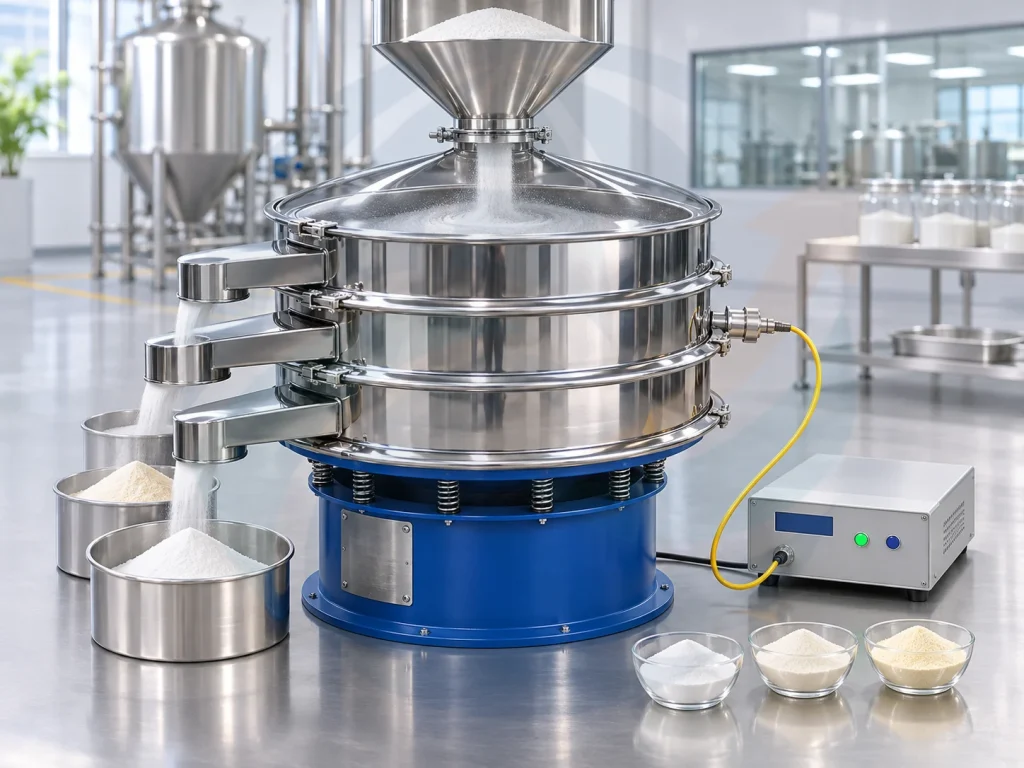
Choose the number of decks from the required output fractions and the ability of each deck to perform its task. More decks do not automatically create more usable capacity. Lower decks receive the material passed by the decks above them. The detailed single deck vs multi deck screens guide covers the checks and decision boundaries.
Standard Screen Configuration
A standard screen is a sensible starting point when its documented configuration meets the duty and installation requirements. Customization becomes useful when a defined gap remains, such as a connection, material-contact requirement or footprint constraint. The detailed standard vs custom vibrating screen guide covers the checks and decision boundaries.
Before final approval, connect this review with vibrating screen material specification so the next stage uses the same assumptions.
Turn the Selection into a Purchase Specification
Define capacity and separation targets alongside the material brief, then review screen media selection. Once a candidate meets the technical requirements, use the screen purchasing process to agree supply scope and acceptance. These decisions should stay consistent: changing the required product fraction can change both the appropriate media and the duty quoted by the supplier.
Frequently Asked Question
Should I choose by motor power?
No. Motor power does not establish screening capacity, separation quality or suitability for a particular material.
For a project-specific review, contact HaoYuan with the material, required result and the details identified in this guide.
 English
 French
 German
 Indonesian
 Korean
 Malay
 Japanese