
Food Powder Screening Equipment
Industrial screening solutions for flour, starch, sugar, spices, and other suitable dry food ingredients
Food Powder Screening Solutions for Industrial Processing
Food powder screening equipment helps manufacturers separate particles by size, remove oversized material, and prepare ingredients for further processing or packaging. Common applications include flour, starch, sugar, spices, and other suitable dry food powders.
Different ingredients present different screening challenges. Fine powders may cause mesh blinding, while moisture and particle agglomeration can affect material flow and separation performance.
HaoYuan offers rotary vibrating screens and ultrasonic-assisted screening equipment for suitable powder processing applications. Equipment selection depends on material properties, target particle size, required throughput, and cleaning requirements.
Food Powder Screening by Material
Different food ingredients require different screening approaches. Explore common applications and key selection considerations for flour, starch, sugar, and spice powders

Flour Screening
Remove oversized particles and lumps from flour to support consistent screening and further processing

Starch Screening
Separate oversized particles and lumps from starch to support consistent screening and further processing

Sugar Screening
Classify sugar particles by size and remove oversized material to support consistent processing and product quality

Spice Powder Screening
Remove oversized particles and lumps from spice powders to support consistent screening and further processing
Recommended Food Powder Screening Equipment
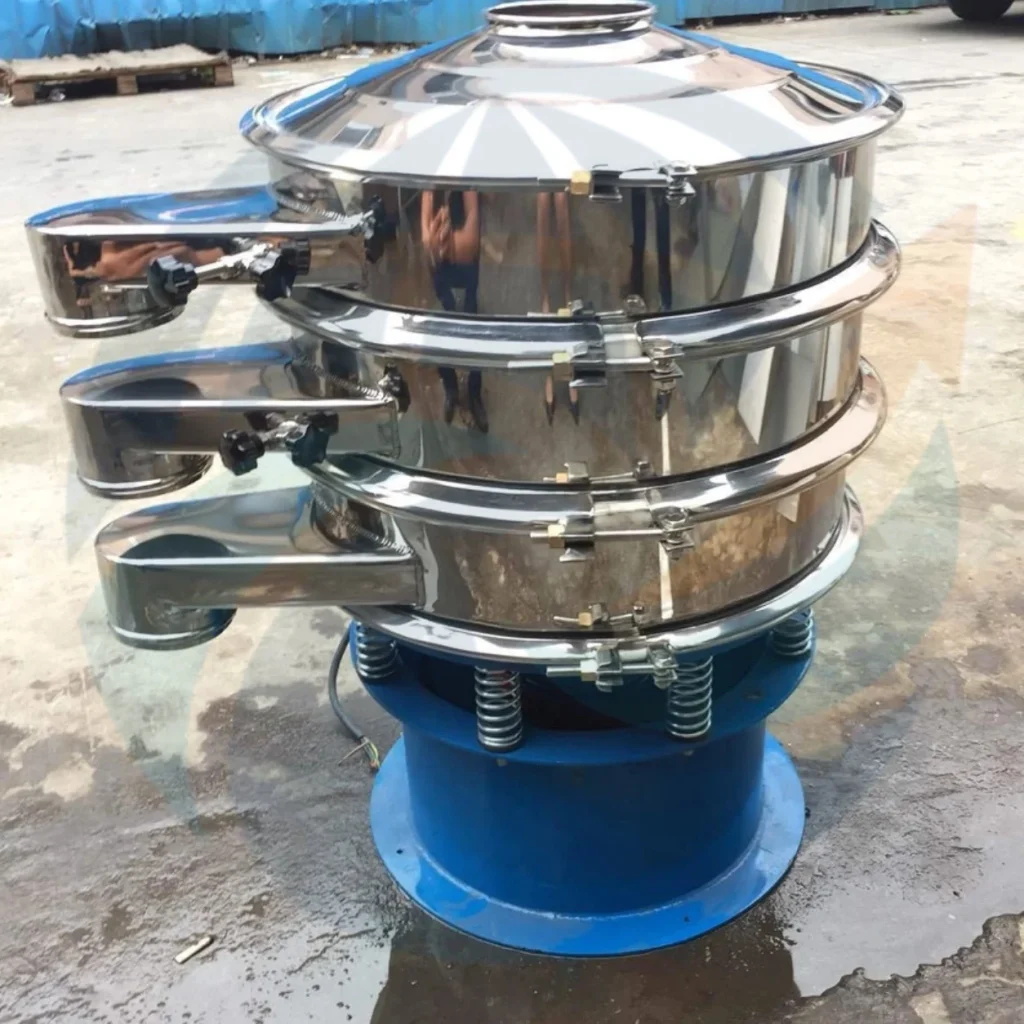
Rotary Vibrating Screen
Powder Screening and Oversize Removal
Rotary vibrating screens can be considered for removing oversized particles and agglomerates from suitable food powders, including flour, starch, and sugar.
Particle Size Classification
A suitable multi-deck configuration can separate material into different size fractions according to the required screen openings.
Flexible Screening Configurations
Screen mesh, discharge arrangements, and contact materials should be selected according to the ingredient, production requirements, and cleaning needs.
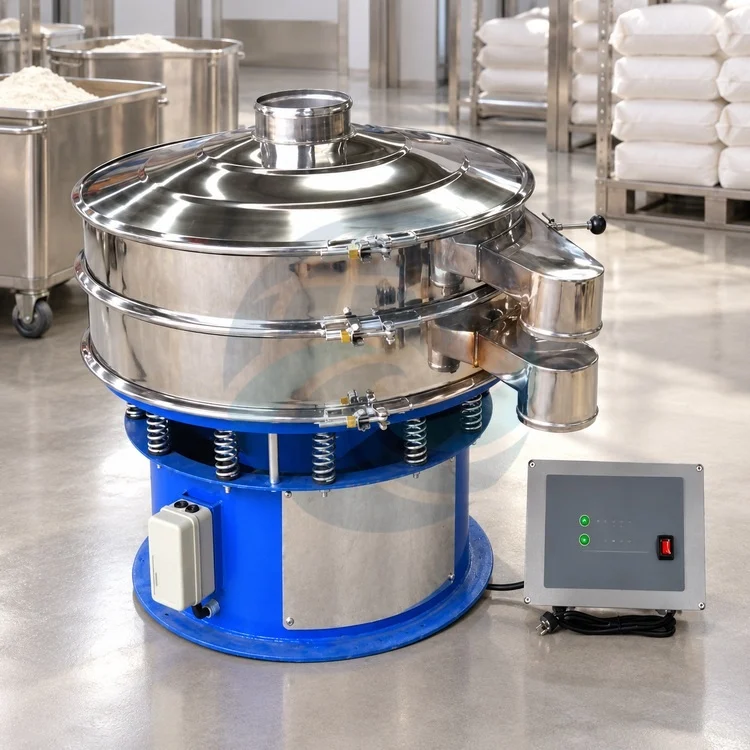
Ultrasonic Vibrating Screen
Fine Powder Screening
Ultrasonic-assisted screening can be considered for certain fine food powders where conventional vibration may not provide satisfactory screening performance.
Reduced Mesh Blinding
High-frequency vibration applied to the screen mesh may help reduce certain forms of blinding caused by fine particles.
Application-Specific Selection
The suitability of ultrasonic screening depends on powder characteristics, target particle size, moisture, and operating conditions. Material evaluation is recommended before selecting a configuration.
Common Food Powder Screening Challenges
Screening flour, starch, sugar, and spice powders can present different challenges depending on particle size, moisture, flowability, and processing conditions. Understanding these issues helps buyers evaluate suitable screen media, equipment configurations, and material handling requirements
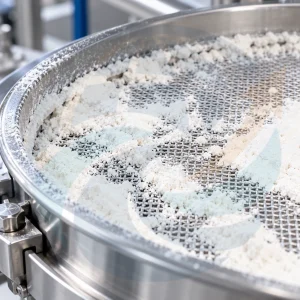
Mesh Blinding
Fine particles can block screen openings, reducing screening efficiency and throughput.
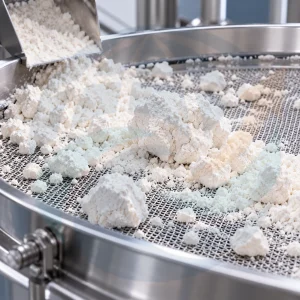
Powder Agglomeration
Moisture and cohesion can cause powder lumps, affecting material flow and separation.
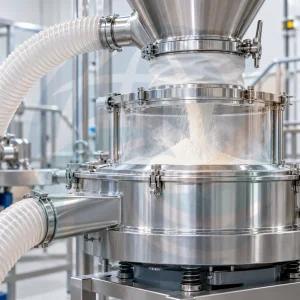
Dust Containment
Fine powders may generate airborne dust during screening, feeding, and discharge.

Cleaning & Cross-Contamination
Screen mesh and contact surfaces require proper cleaning to reduce contamination risks.
How to Choose Food Powder Screening Equipment
Choosing suitable food powder screening equipment requires an understanding of the material, target particle size, required capacity, and processing conditions. The following checklist helps buyers prepare essential information before requesting a screening equipment quotation.
| Information | What to Share |
|---|---|
| Food Material | Material name, such as flour, starch, sugar, or spice powder, and any special handling characteristics. |
| Particle Size | Feed particle size range or particle size distribution, if available. |
| Screening Goal | Oversize removal, powder classification, or the required particle size fractions. |
| Screen Opening | Required opening size in micrometers or millimeters, or mesh count with the applicable standard. |
| Required Capacity | Target feed rate in kg/h or t/h, including continuous or batch operating conditions. |
| Material Properties | Moisture content, bulk density, flowability, and any known agglomeration or mesh blinding issues. |
| Decks and Outlets | Number of required size fractions and how each product stream will be collected. |
| Contact Materials | Required product-contact materials, seals, cleaning access, and relevant hygiene requirements. |
| Dust Control | Dust containment requirements and any relevant powder handling or combustible dust hazards. |
| Installation | Available space, inlet and outlet positions, power supply, and connections to other equipment. |
Not sure which screening technology is suitable for your material? Read our Rotary vs. Linear vs. Ultrasonic Vibrating Screens comparison guide to understand the differences in working principles, applications, and selection considerations.
Related Material Handling Equipment
Food powder screening systems may be connected to feeding, conveying, and collection equipment. Explore related material handling options for suitable bulk materials. Equipment compatibility, cleaning requirements, and food-contact suitability should be confirmed for each application
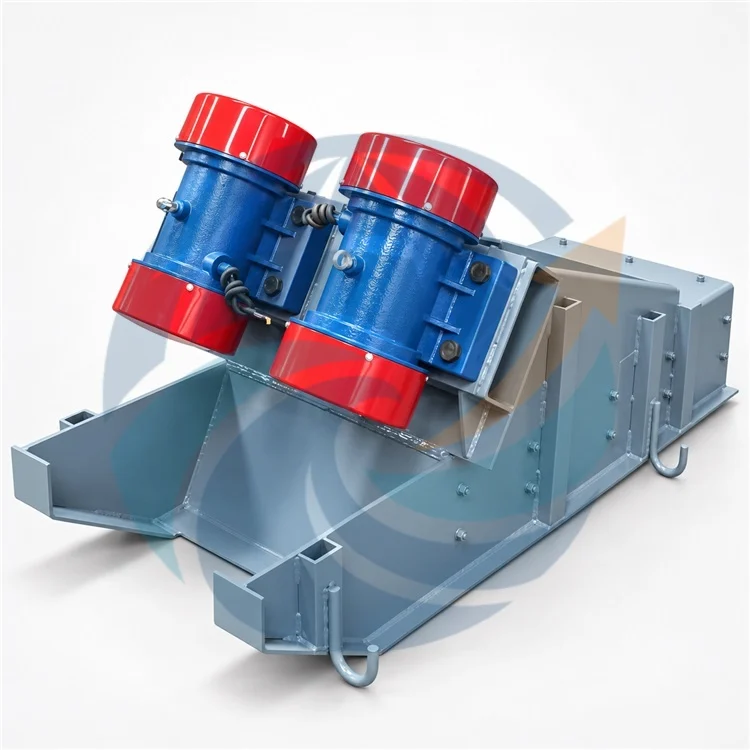
Vibrating Feeder
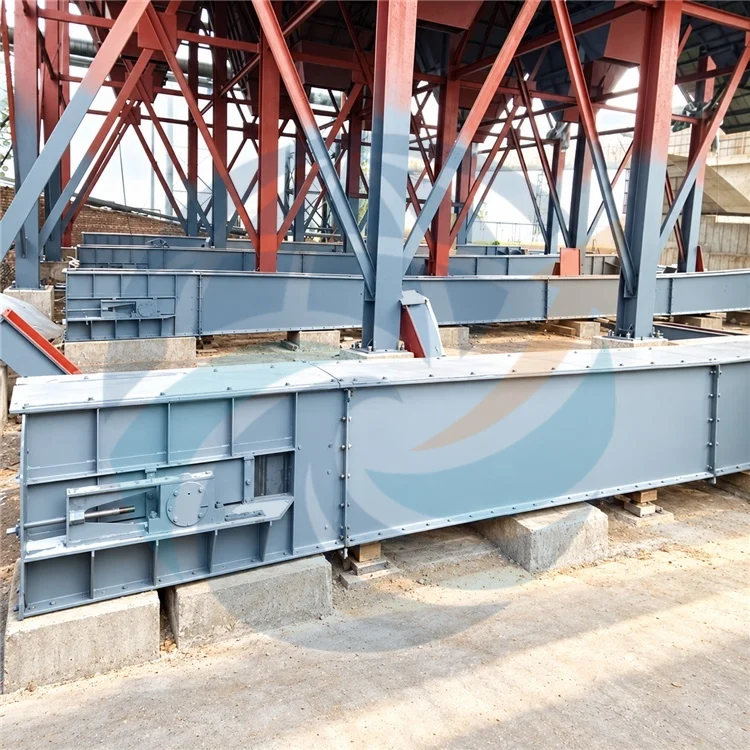
Drag Chain Conveyor
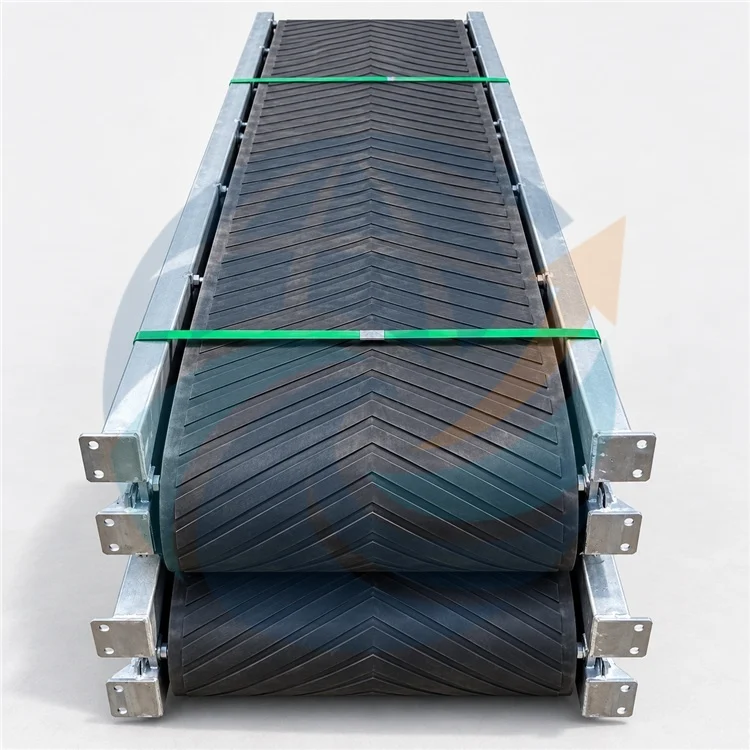
Belt Conveyor
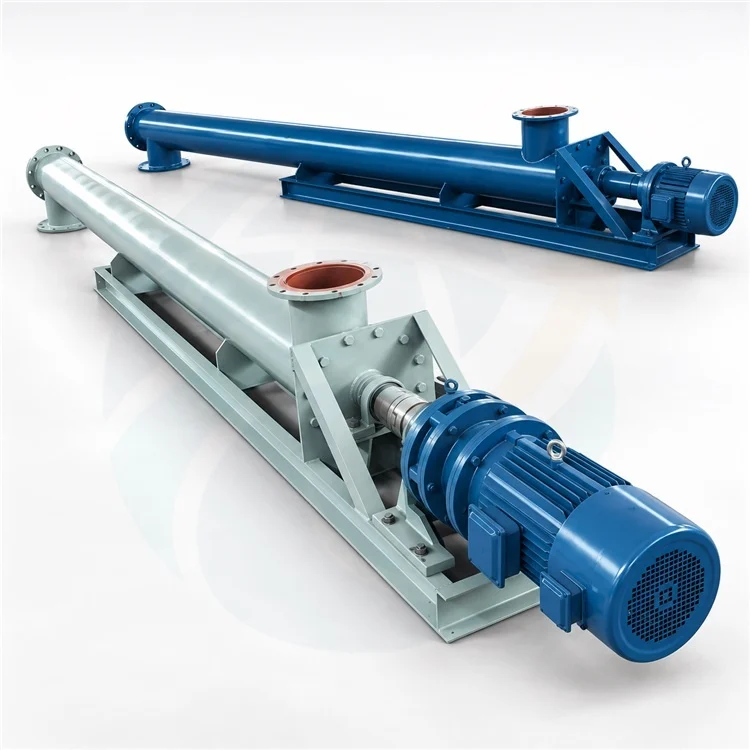
Screw Conveyor
Frequently Asked Questions About Food Powder Screening
1.What is food powder screening equipment used for?
Food powder screening equipment separates particles by size to remove oversized material, classify ingredients, and prepare powders such as flour, starch, and sugar for further processing.
2.Which vibrating sieve is suitable for flour screening?
A rotary vibrating sieve may be suitable for flour screening and oversize removal. The final configuration depends on flour characteristics, required particle size, throughput, and cleaning requirements.
3.Can ultrasonic screening help with fine starch powders?
Ultrasonic-assisted screening may help reduce mesh blinding when processing certain fine starch powders. Its suitability depends on moisture, particle characteristics, and screening conditions.
4.How do I choose the correct sieve mesh for food powders?
Choose the screen opening based on the required separation size and particle size distribution. Material flowability, moisture, and throughput should also be considered before selecting the mesh.
5.What affects food powder screening capacity?
Screening capacity depends on particle size, bulk density, moisture, flowability, screen opening, and machine configuration. Actual throughput should be evaluated for the specific material.
6.Can one vibrating screen process different food powders?
A vibrating screen may handle different food powders with suitable configurations. Screen media, cleaning procedures, contact materials, and contamination risks must be reviewed for each ingredient.
7.What information should I provide when requesting a quotation?
Please provide the material name, target screen opening, required capacity, moisture condition, and any handling challenges. Installation and cleaning requirements can also help determine suitable equipment options.
Discuss Your Food Powder Screening Needs
Tell us about your material, required particle size, and screening capacity
 English
 French
 German
 Indonesian
 Korean
 Malay
 Japanese