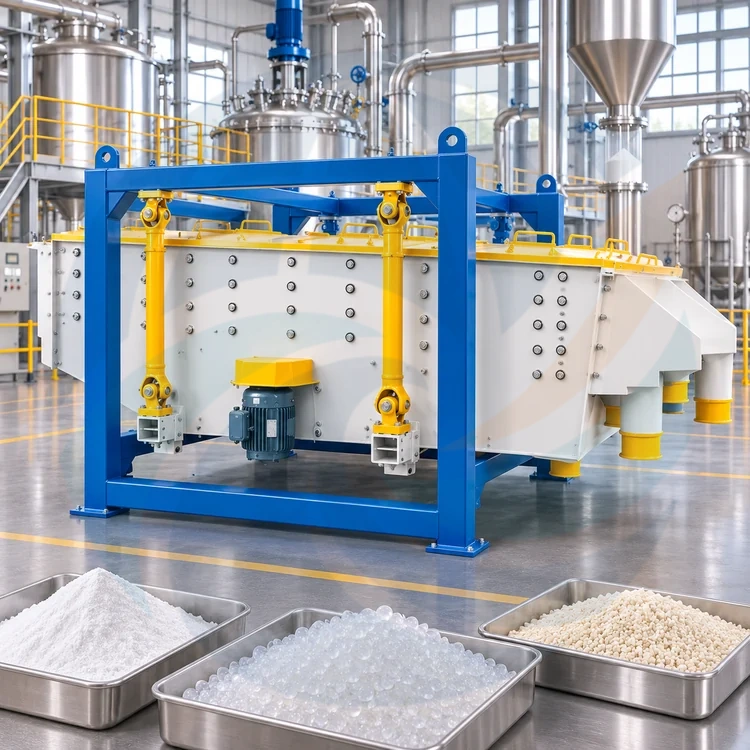
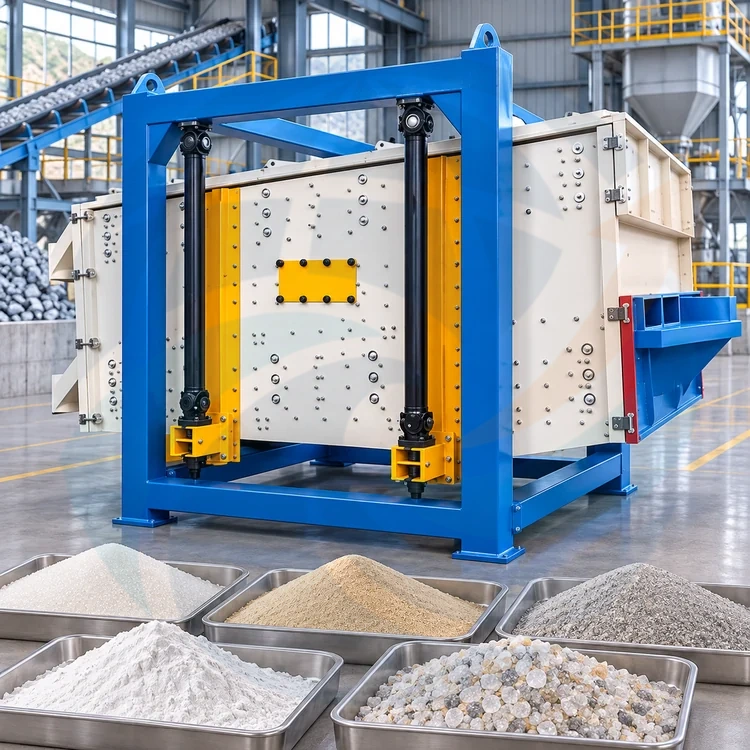
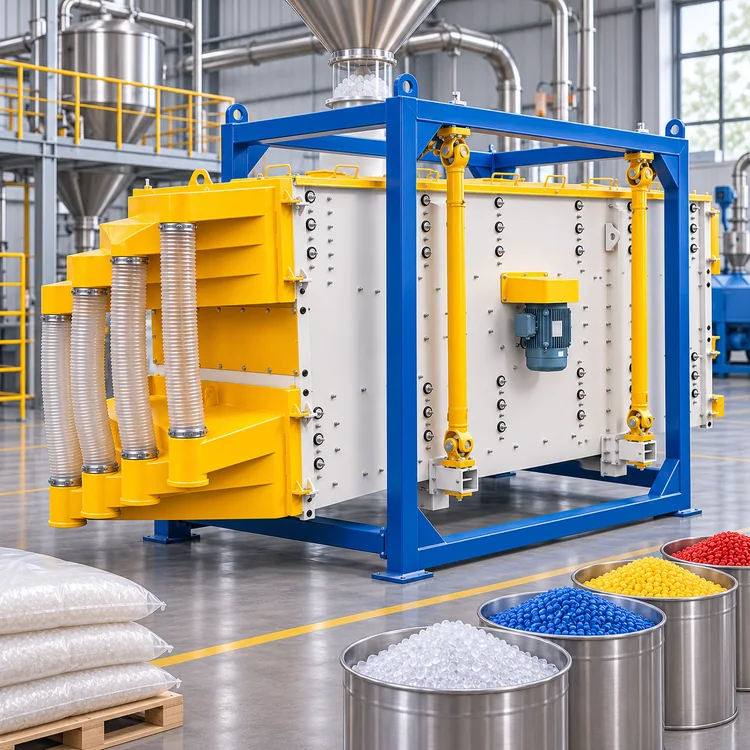
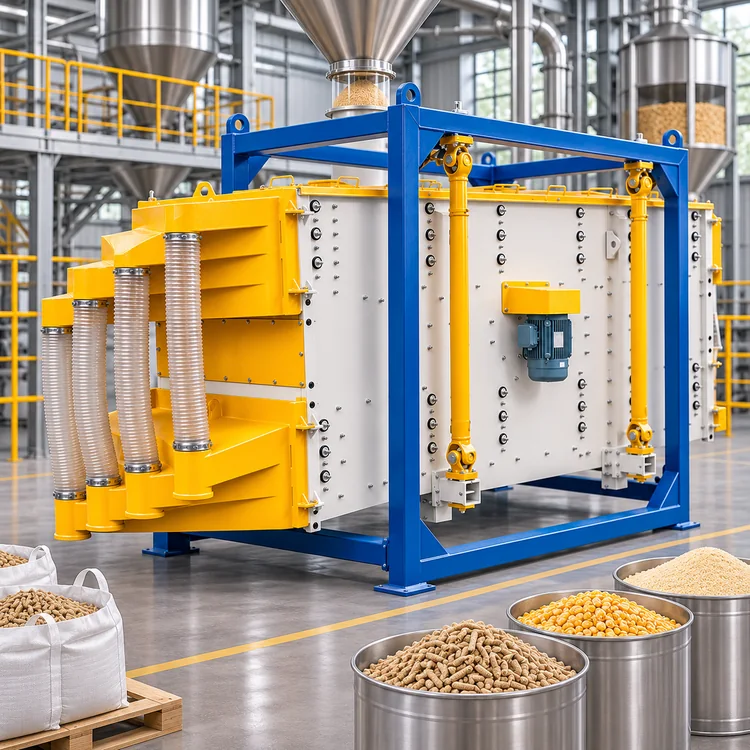
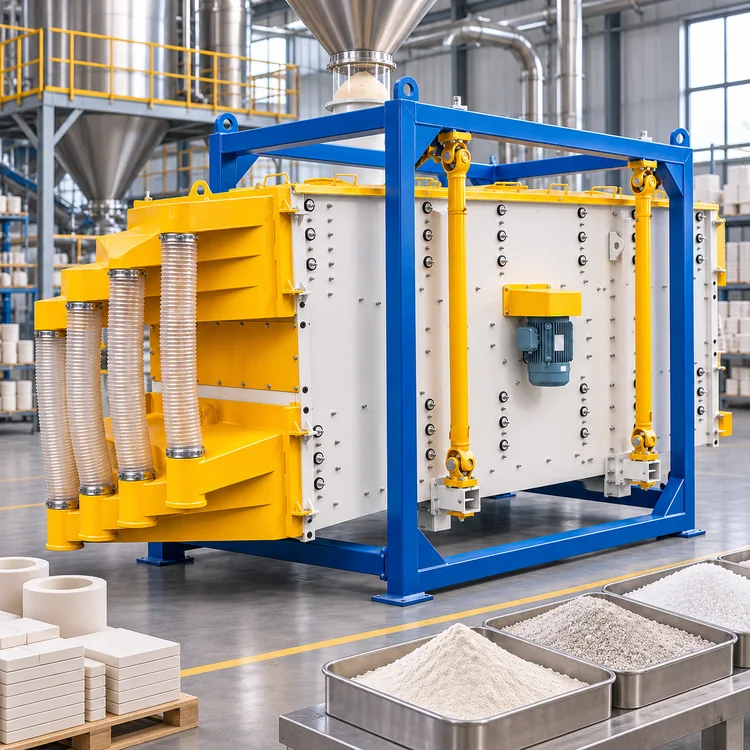
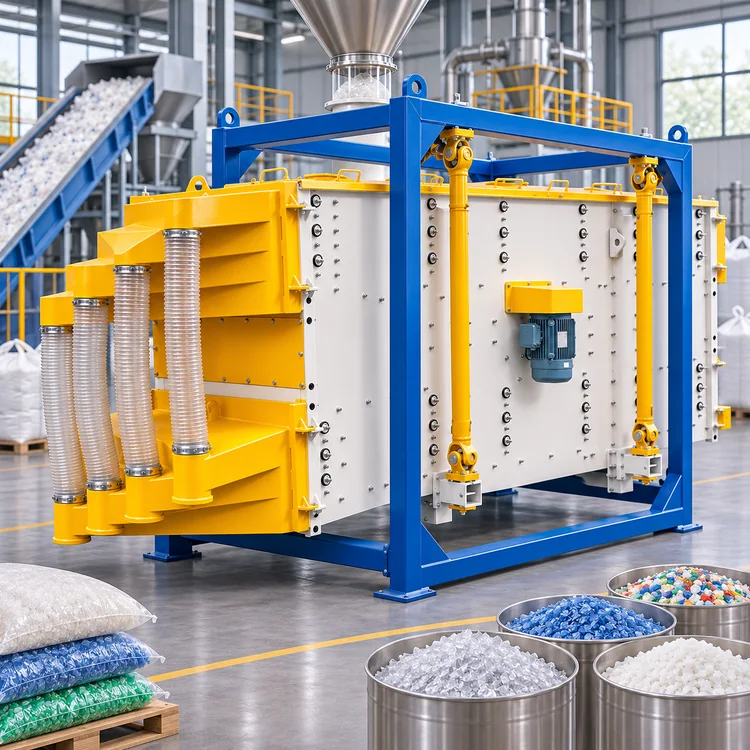
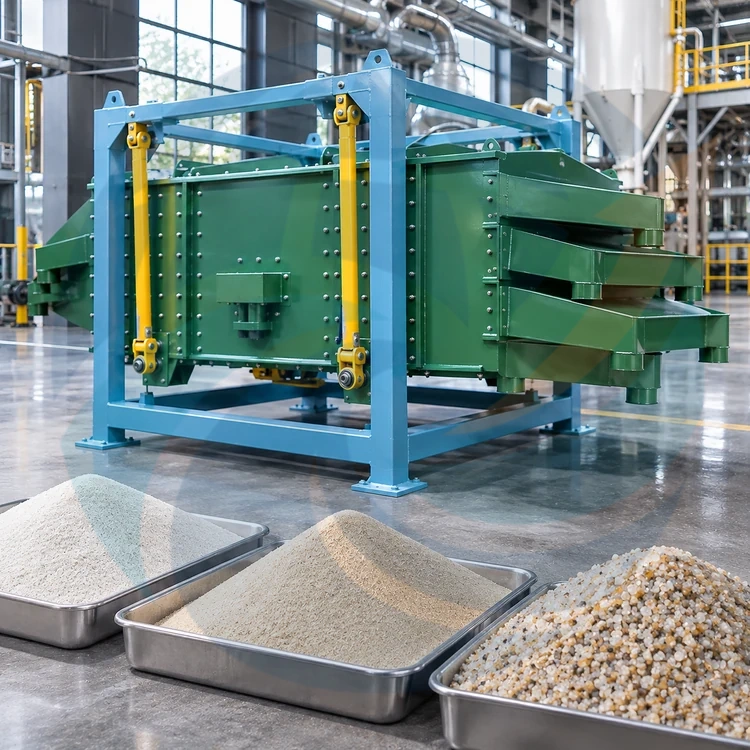
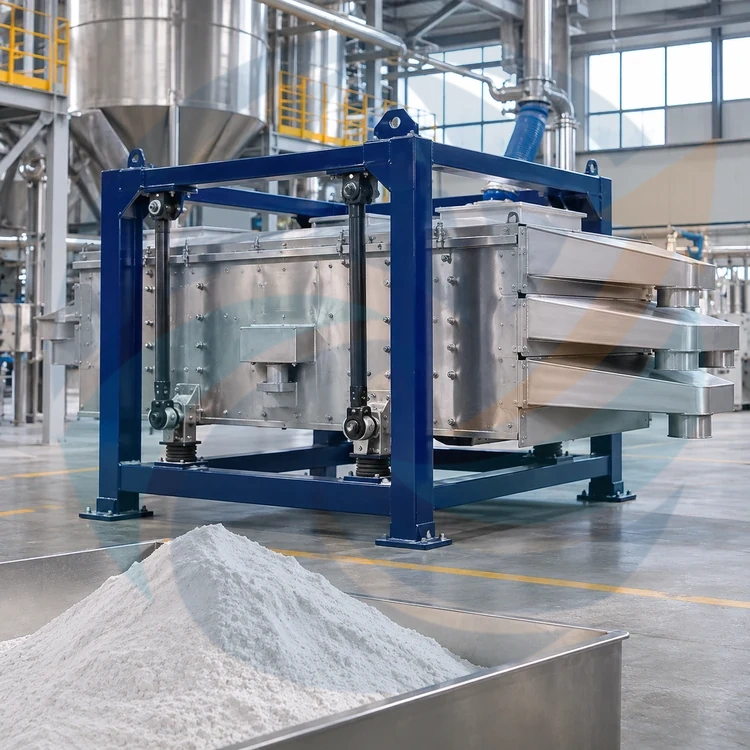
Square Swing Screen for Powder & Granule Screening
Gentle screening of dry powders and granules for food ingredients, chemicals, and other bulk material processing applications
What Is a Square Swing Screen?
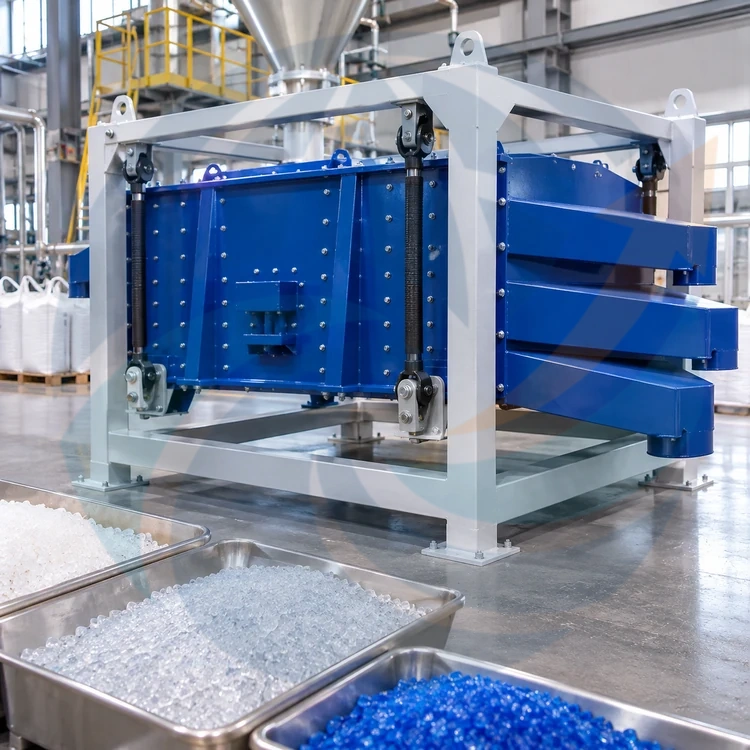
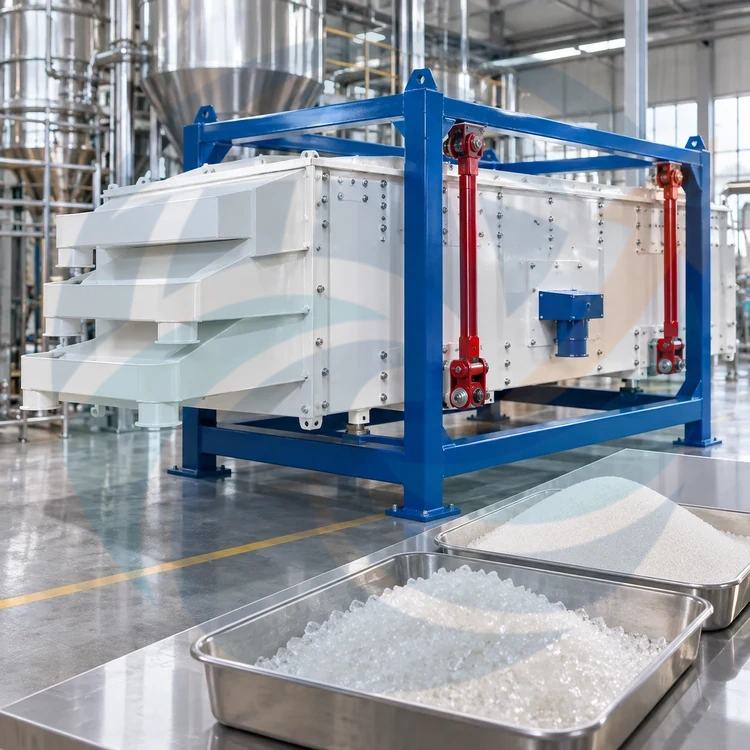
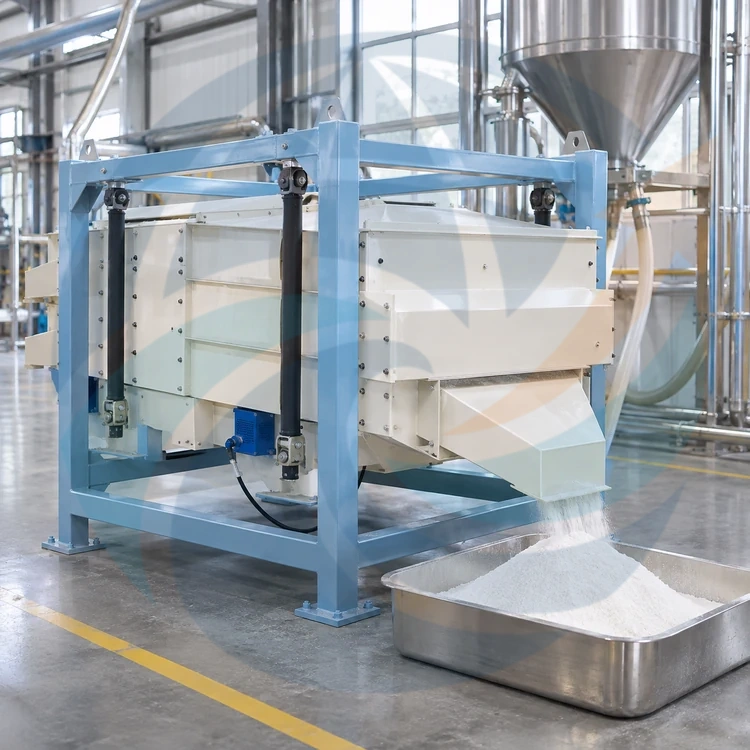
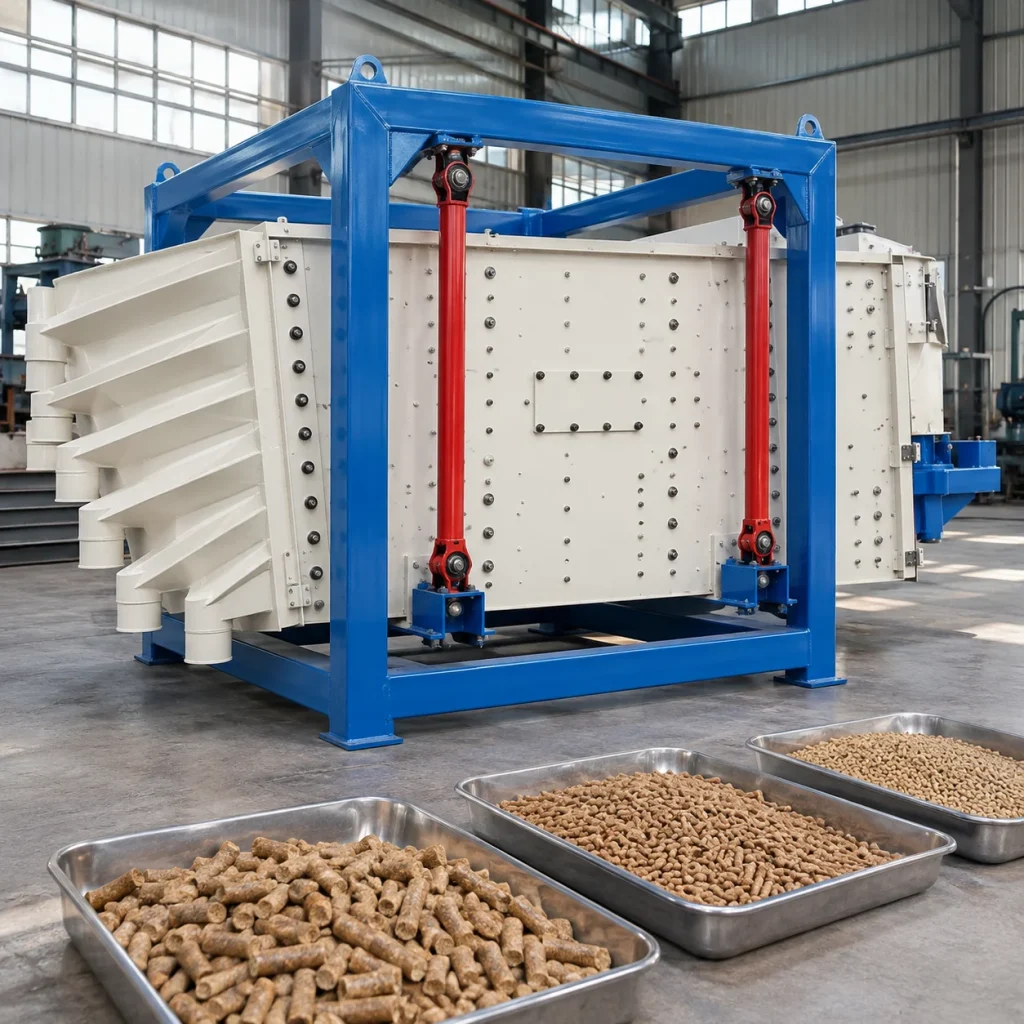
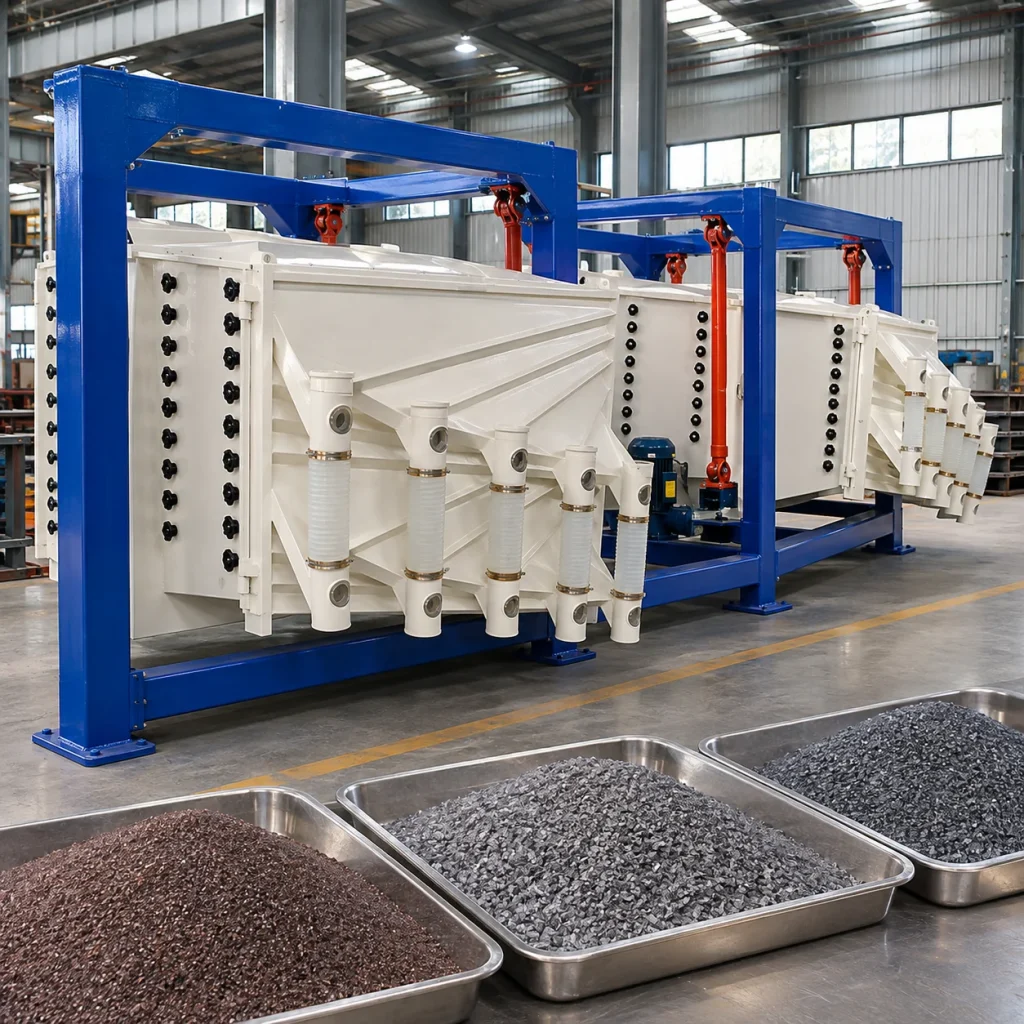
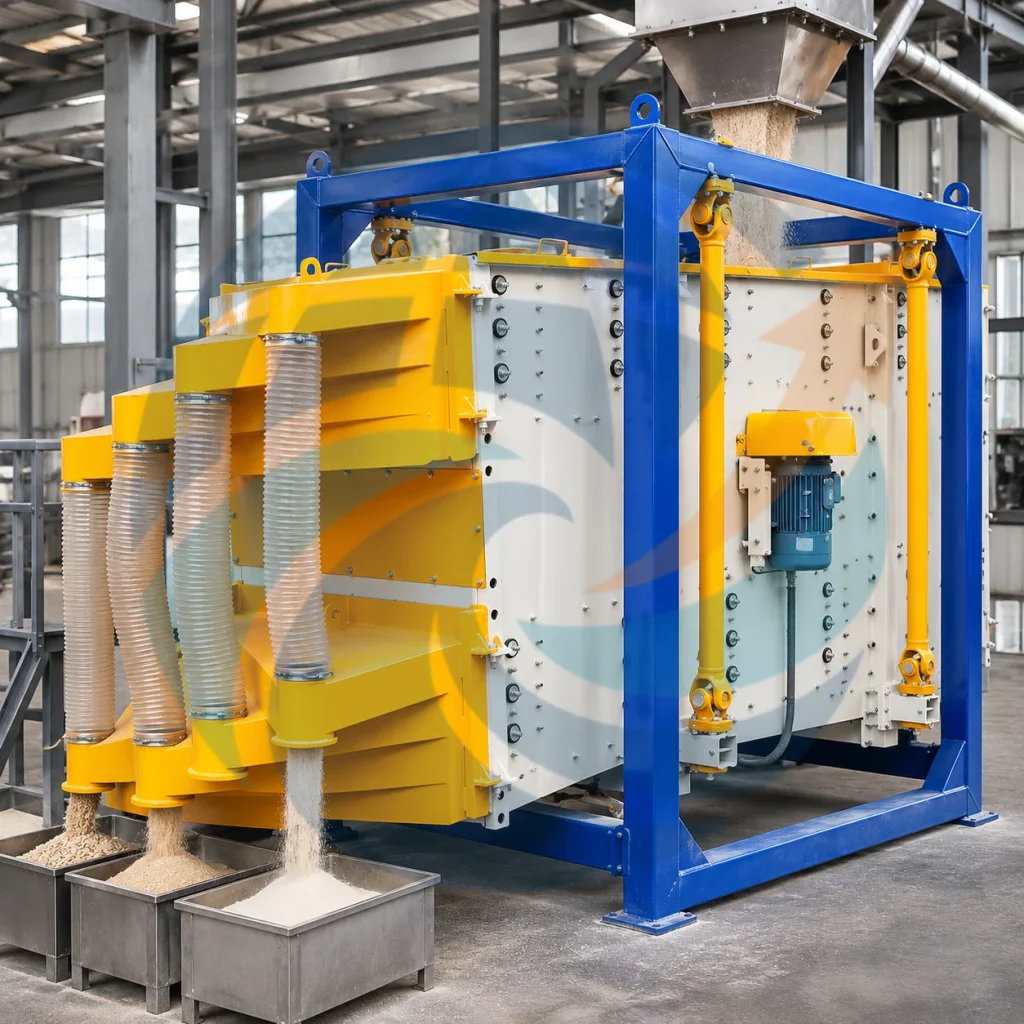
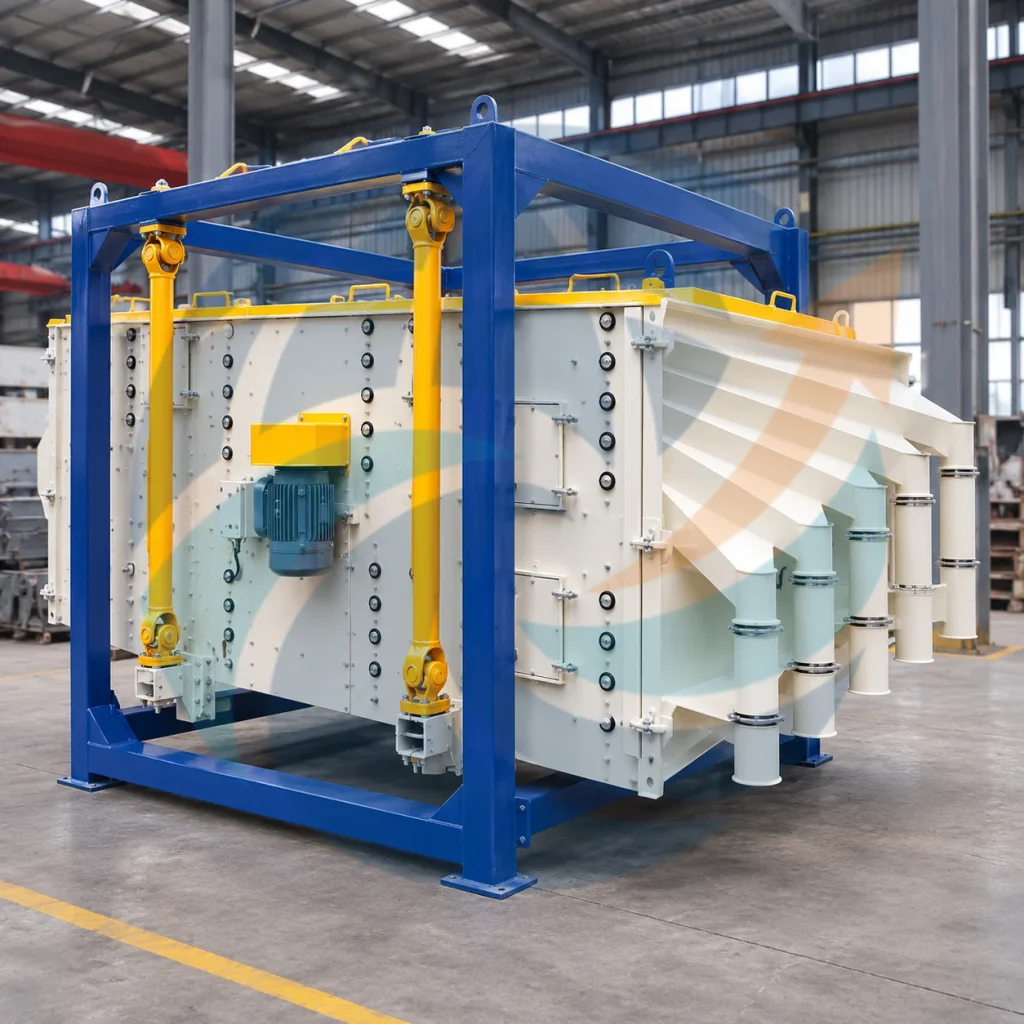
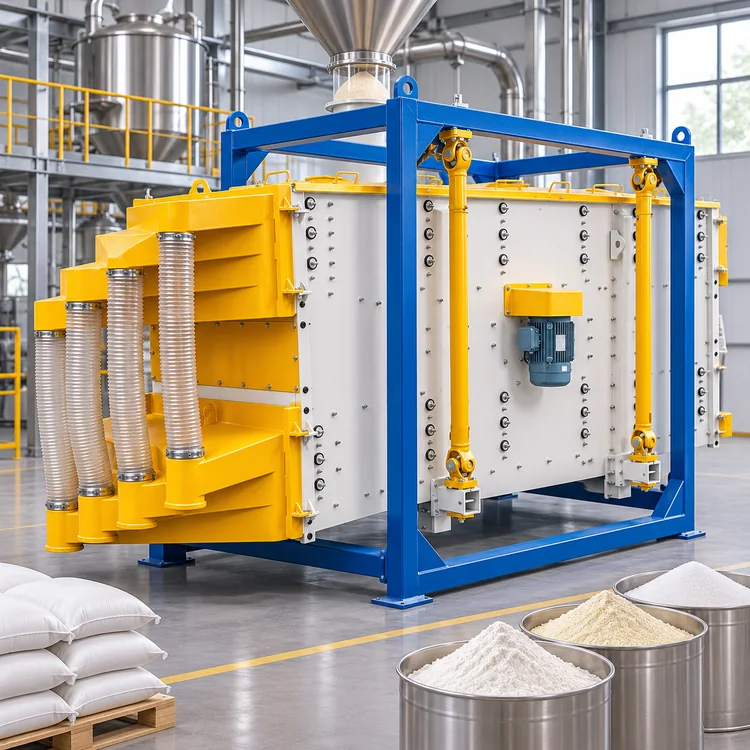
A square swing screen, also known as a rectangular gyratory screener, is used to separate dry powders and granular materials by particle size. Its enclosed rectangular screen box moves in a controlled, mainly horizontal gyratory motion, allowing material to spread across the screening surface.
Smaller particles pass through the screen openings, while larger particles move toward the discharge outlets. Depending on the screen deck arrangement, the equipment can separate materials into multiple size fractions.
Where Is a Square Swing Screen Used?
Square swing screens are used for applications involving sand, fertilizer, chemical powders, and selected food ingredients. The right configuration depends on material properties, moisture content, required particle size, and processing capacity.
HaoYuan can help buyers evaluate their screening requirements and compare suitable vibrating screen options.
Square Swing Screen Applications by Industry
Explore screening applications for dry powders and granules across food, chemical, fertilizer, mineral, and other industrial processing operations
Square Swing Screen for Food Ingredients
Grade dry flour, starch, and sugar by particle size before blending or packaging
Square Swing Screen for Chemicals
Separate chemical powders and granules into suitable size fractions for further processing
Square Swing Screen for Fertilizer
Classify fertilizer granules and separate oversized particles before packaging or reprocessing
Square Swing Screen for Minerals & Sand
Screen silica sand, calcium carbonate, and other dry minerals into different size fractions
Square Swing Screen for Plastics
Grade plastic pellets and resin granules to separate unwanted fines and oversized particles
Square Swing Screen for Animal Feed
Screen dry feed ingredients and pellets before mixing, packaging, or further processing
Square Swing Screen for Ceramics
Separate ceramic powders and abrasive grains according to particle size requirements
Square Swing Screen for Recycled Plastics
Classify suitable dry plastic regrind and recycled granules for further processing
Square Swing Screen Solutions by Material
Explore material-specific applications and HaoYuan vibrating screens.
Square Swing Screen for Silica Sand
Classify dry silica sand into different particle size grades for industrial processing
Square Swing Screen for Calcium Carbonate
Separate calcium carbonate powders into suitable size fractions for further processing
Square Swing Screen for Fertilizer Granules
Remove fines and oversized particles from dry fertilizer granules before packaging
Square Swing Screen for Plastic Pellets
Grade plastic resin pellets and separate unwanted fines or oversized material
Square Swing Screen for Sugar Crystals
Classify dry sugar crystals by particle size for food ingredient processing
Square Swing Screen for Starch Powder
Screen dry starch powder to remove unwanted oversized particles before blending
Square Swing Screen for Feed Pellets
Separate feed pellets by size before packaging or further processing
Square Swing Screen for Abrasive Grains
Grade dry abrasive grains into different particle size fractions for industrial use
How Does a Square Swing Screen Work?
HaoYuan square swing screen uses a controlled gyratory motion to separate dry powders and granules by particle size. Material moves across the rectangular screening surface, allowing smaller particles to pass through the mesh while larger particles continue toward the discharge outlets.
1. Material Feeding
Material enters the screen and spreads across the mesh.
2. Gyratory Screening
Horizontal gyratory motion separates particles by size.
3. Material Discharge
Separated materials exit through their designated outlets.
Explore HaoYuan’s screen selection guide or NIST’s particle size guide for more information.
Square Swing Screen Configurations
HaoYuan helps buyers review screen deck arrangements, mesh openings, and material discharge requirements when selecting a square swing screen.
Screen Deck & Mesh Options
Screen openings and deck arrangements are selected according to material size and separation requirements.
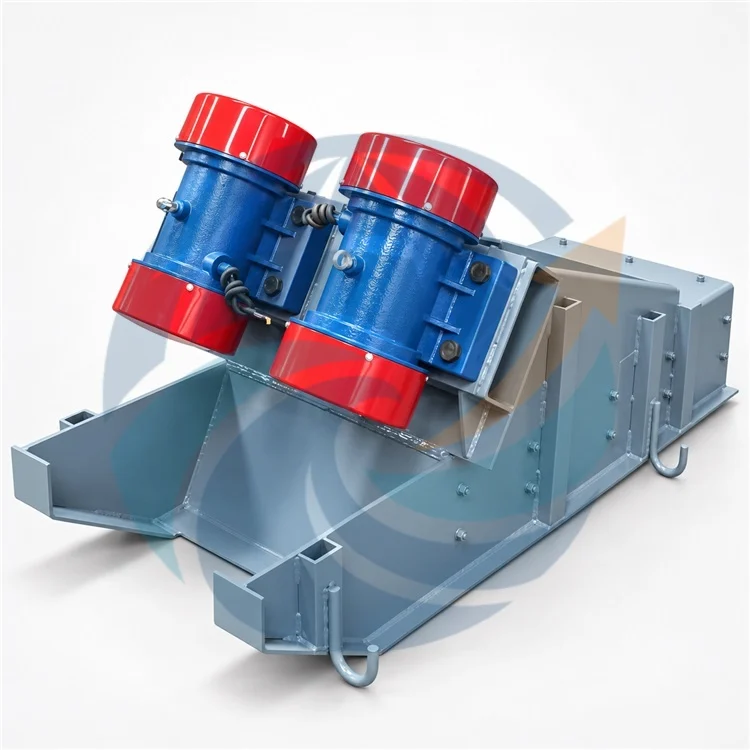
Drive & Support System
The drive mechanism and suspension system support controlled gyratory screening motion.
Feed & Discharge Design
Inlet and outlet arrangements depend on material flow, required size fractions, and plant layout.
Explore other industrielle Vibrationssiebe or refer to ASTM E2016 for industrial woven wire cloth specifications.
How to Choose the Right Square Swing Screen
Review sizing, capacity, and installation needs with HaoYuan’s screen selection guide.
| Selection Factor | Was zu bestätigen ist |
|---|---|
| Material Type | Material name, bulk density, and particle properties |
| Feed Particle Size | Maximum feed size and typical particle size range |
| Required Separation Size | Target mesh opening and required product grades |
| Processing Capacity | Required throughput in kg/h or t/h |
| Material Conditions | Moisture, flowability, and tendency to clump |
| Screen Deck Arrangement | Number of required size fractions and screening stages |
| Screen Mesh Requirements | Mesh opening, material, and cleaning requirements |
| Feeding & Discharge Layout | Inlet position, outlet directions, and material flow |
| Installation & Power | Available space, voltage, frequency, and site conditions |
| Cleaning & Maintenance | Cleaning frequency, material changeovers, and access needs |
Explore Related Equipment
Vibrationsförderer
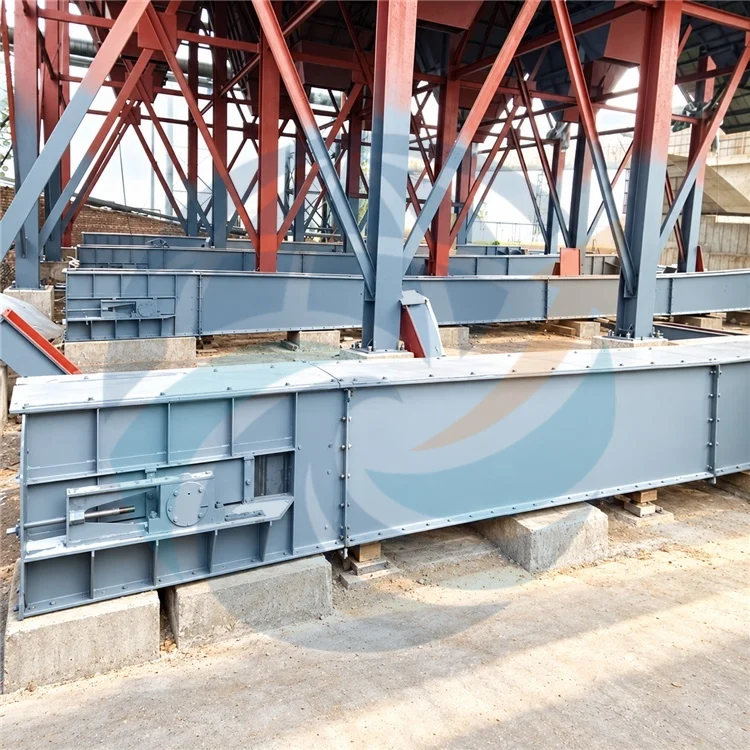
Kratzkettenförderer
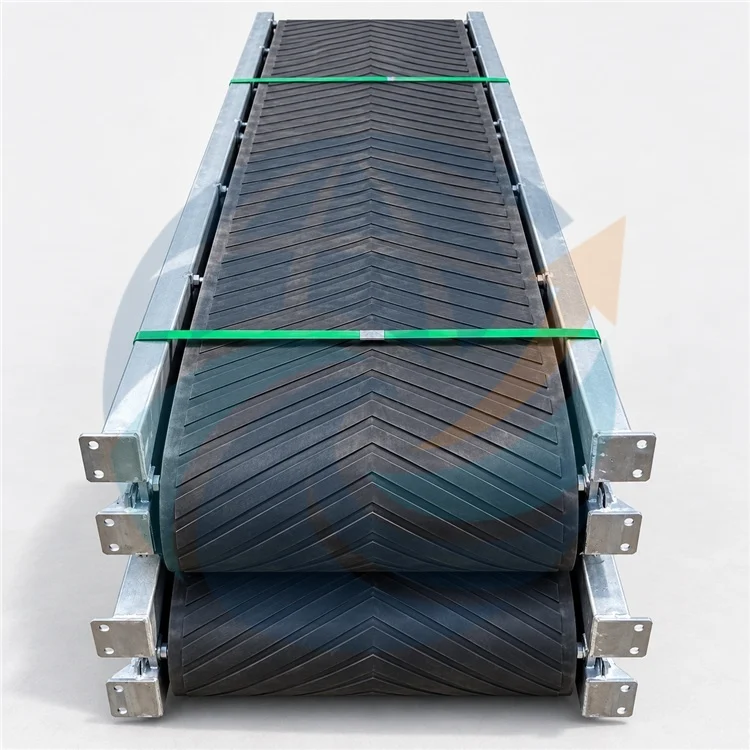
Bandförderer
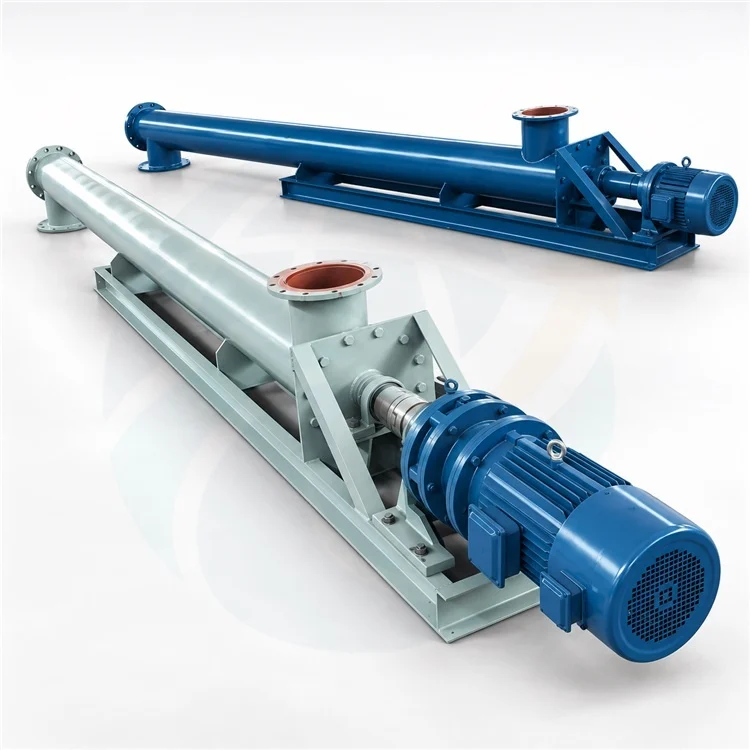
Schneckenförderer
Square Swing Screen FAQs
1. What is a square swing screen used for?
A square swing screen separates dry powders and granules into different particle size fractions. Common applications include silica sand, chemicals, fertilizers, and plastic pellets.
2. How does a square swing screen work?
It uses mainly horizontal gyratory motion to move material across the mesh. Fine particles pass through, while larger particles move toward the discharge outlets.
3. What is the difference between a square swing screen and a linear vibrating screen?
A square swing screen uses gyratory motion, while a linear vibrating screen uses directed vibration. The suitable option depends on the material and screening requirements.
4. Can a square swing screen produce multiple particle sizes?
Yes, multiple size fractions are possible with suitable screen deck arrangements. The final configuration depends on your separation requirements.
5. How do I choose the right screen mesh?
Mesh openings should match your target particle size and material characteristics. Read HaoYuan’s screen selection guide for more information.
6. Can a square swing screen handle wet or sticky materials?
These screens are generally better suited to dry, free-flowing materials. Damp or sticky products may require testing or a different screening solution.
7. What information is needed to request a quotation?
Please provide your material, feed particle size, target mesh opening, required capacity, and number of output grades. Drawings or material photos are also helpful.
Angebot anfordern
Tell HaoYuan about your samples and testing requirements